Event Article
At the Coordinates of Our Time, Shaping the Future: PKU Guanghua School of Management Alumni Association of Eastern America 2026 New Year Forum Held Successfully in New York
An annual exchange on China-U.S. relations, global macro investment frameworks, and AI-era trends.
Summary
On January 10, 2026, the PKU Guanghua School of Management Alumni Association of Eastern America hosted its New Year Forum in New York. Senior alumni and industry leaders shared perspectives on global macro trends, investment frameworks, China-U.S. relations, and AI-era trends, while the roundtable addressed career development and long-term trust building for younger alumni.
Forum Introduction
In keeping with the school mission of creating management knowledge, cultivating business leaders, and advancing social progress, the PKU Guanghua School of Management Alumni Association of Eastern America held its annual New Year Forum in Manhattan on January 10, 2026. The event unfolded in a visually rich setting and brought together alumni, scholars, and industry guests.
With the theme "At the Coordinates of Our Time, Shaping the Future," the forum aimed to give alumni a shared framework for understanding macro conditions, identifying industry trends, and reflecting on long-term personal growth in a rapidly changing world.
Opening Remarks
New York forum at sunset, mentors and alumni speak across the horizon. A feast of ideas opens a new chapter, and one can still hear Guanghua in the lecture hall.
The forum opened with brief yet warm remarks from Warren Wang, an executive council member of the association. Coinciding with Guanghua School of Management's 40th anniversary, the opening looked back on the school's spirit while expressing hope for the continued growth of the East Coast alumni community.
Macro Perspective: The Coordinates of a Changing World
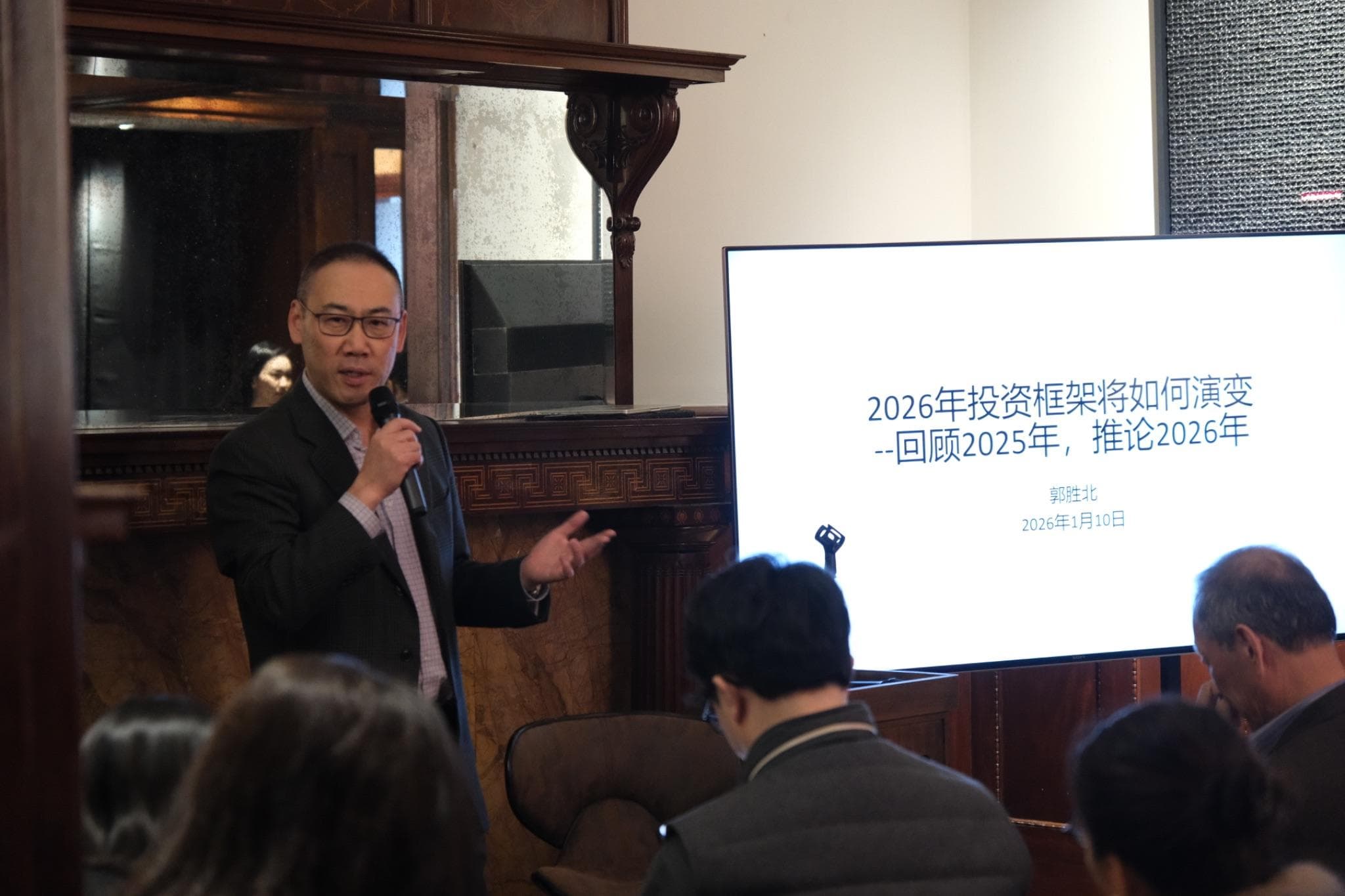
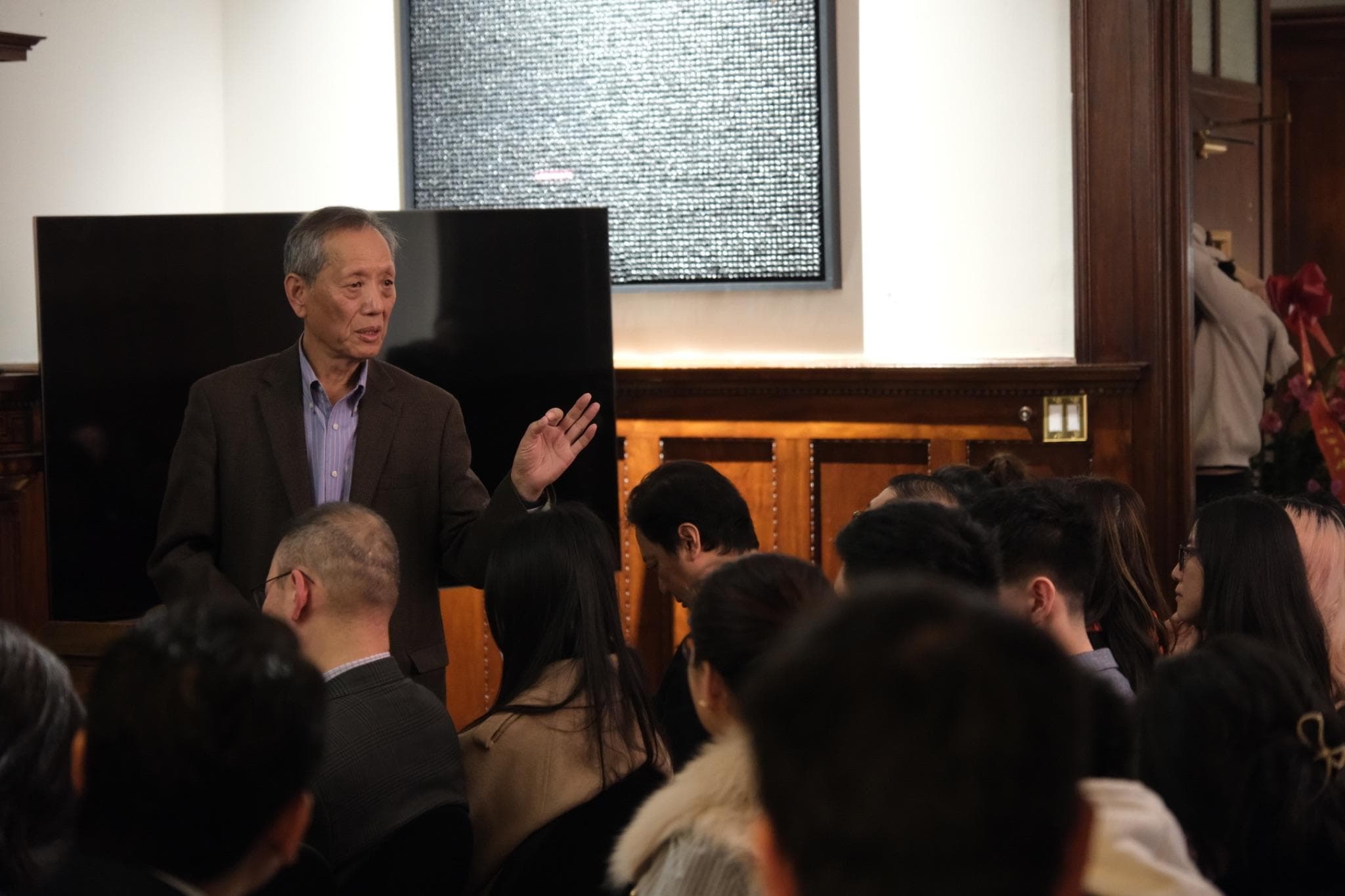
In the main forum, guests Guo Shengbei, Li Shanquan, and Sun Zhe offered complementary lenses through macro investing, long-cycle thinking, and international governance.
- Guo Shengbei analyzed "tariffs, the dollar paradox, and diplomatic thought tribes." He argued that the dollar still holds a strong position in financial markets, but the confidence behind it is being challenged by tariff conflicts and the restructuring of global trade, which is also raising the importance of supra-sovereign assets such as gold.
- He further noted that the policy mix of tax cuts plus tariffs may provide short-term stimulus, but it also amplifies inflation pressure and deepens internal division and long-term structural risk in the United States.
- Li Shanquan explained long-term market logic through six cycles, highlighting the resonance among ideology, geopolitical conflict, economic development, technological iteration, industry evolution, and corporate life cycles.
- He also reminded investors to recognize the boundaries of their capabilities, avoid overconfidence after isolated success, and appreciate the long-term allocation value of resource and tool assets in a world of intensifying conflict.
- Professor Sun Zhe proposed five key indicators for comparing U.S. and China power: economic scale, monetary dominance, military capability, rule-making power, and the supply of international public goods. He cautioned against relying on a single dimension when analyzing great-power dynamics.
- On AI, Sun further identified five key areas: energy infrastructure, talent, intellectual property and intelligence, military-civil fusion, and institutional plus application ecosystems. He emphasized that future outcomes will depend on the comprehensive strength of these system capabilities.
Roundtable: From Historical Cycles to Individual Growth
The panel conversation moved from state-to-state dynamics to the career questions most relevant to younger alumni. The speakers stressed that China-U.S. relations cannot be reduced to trade imbalance; they also reflect deeper institutional dynamics and historical cycles.
When the discussion turned to personal development, several guests emphasized that while professional competence is essential, long-term growth is often supported by the ability to build trust, delay transactions, and remain consistently present. High-quality relationships are not instant exchanges but accumulations validated over time.
- Career progression requires both hard skills and soft skills that make others trust and enjoy working with you.
- Networks are not short-term opportunistic trades; they are delayed exchanges built on long-term and stable interaction.
- In an uncertain global environment, maintaining clarity and knowing your limits matter just as much.
Closing
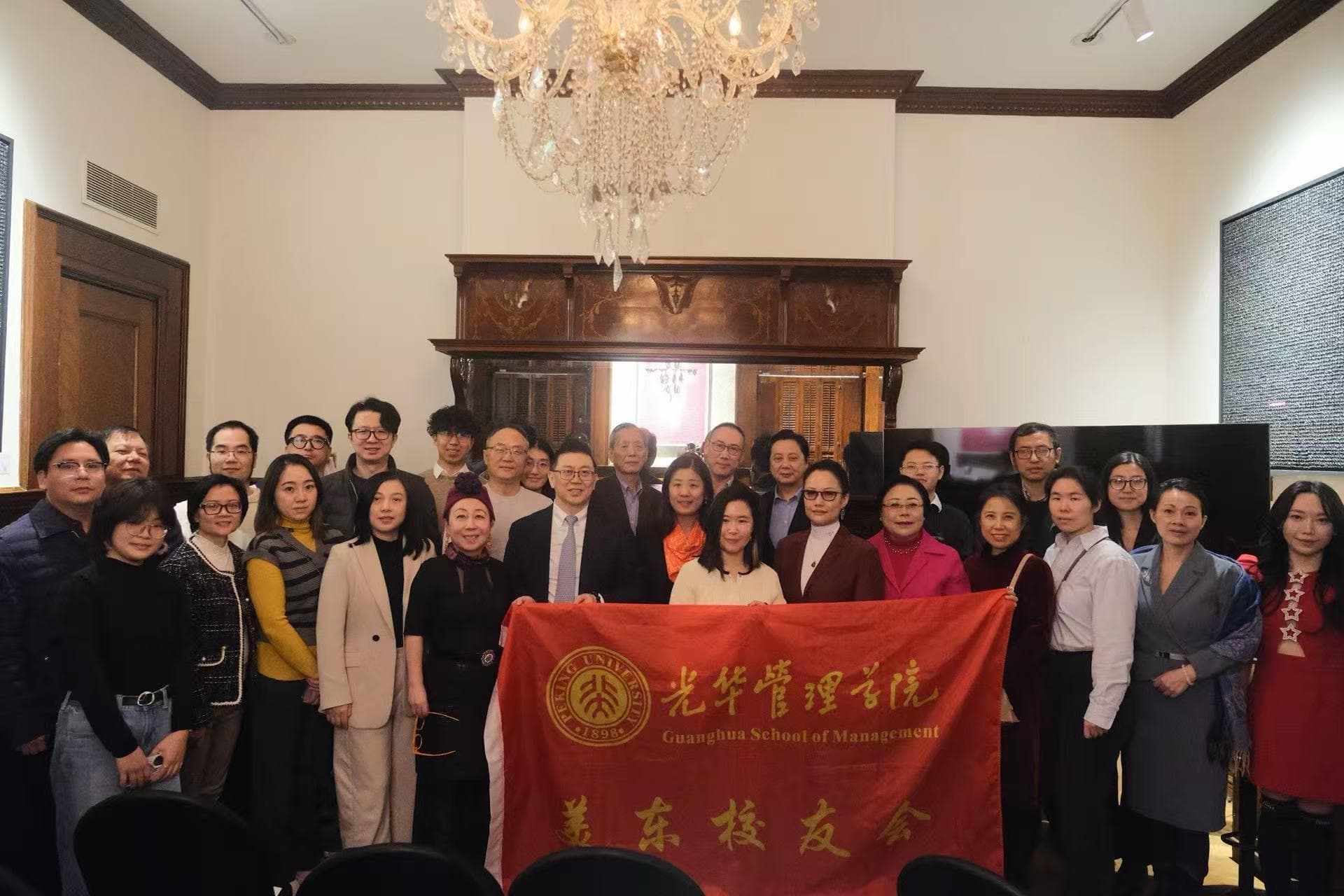
This New Year Forum was more than a knowledge-sharing session. It was a collective reflection spanning academia, industry, and international perspectives. In New York, alumni recalibrated both the coordinates of the era and their own positions within it, giving the PKU Guanghua School of Management Alumni Association of Eastern America a clearer direction for building a high-quality platform for intellectual exchange.
Event Gallery